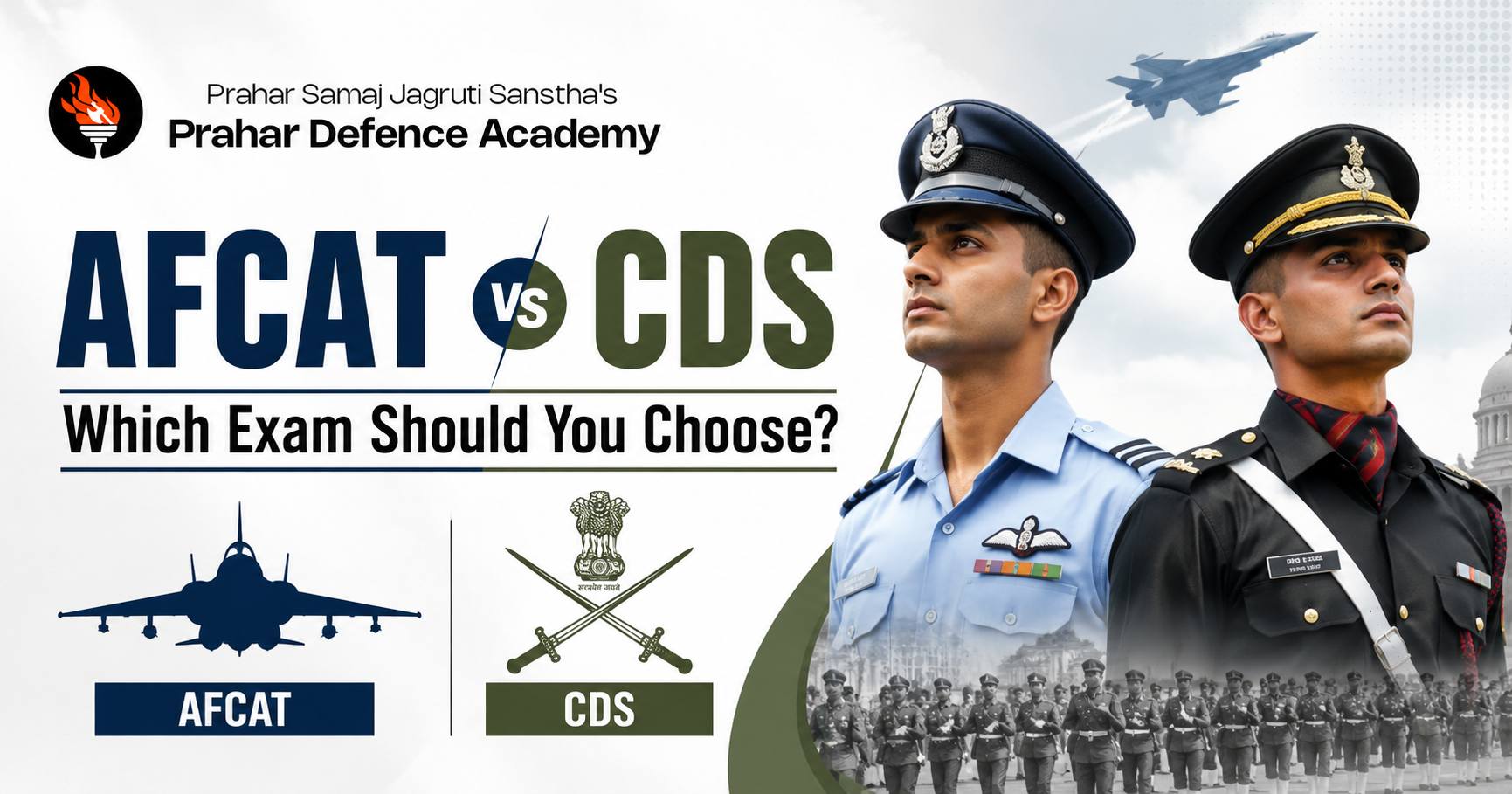
AFCAT vs CDS: Which Exam Should You Choose?
Defence exam aspirants in the age range of 19 to 25 have two paths to go through - AFCAT and CDS. While millions of candidates apply for these two defence exams in a year, not all of them aspire to enter different branches, which leads to the confusion in choosing between AFCAT vs CDS which is better.
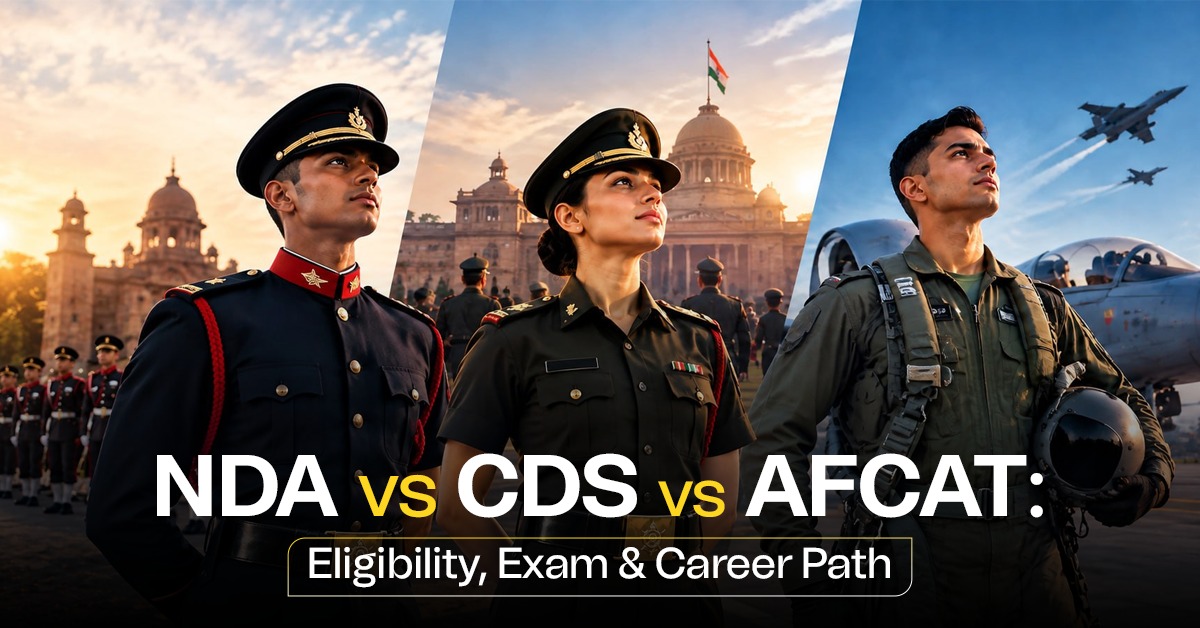
While CDS grants entry into the Indian military, navy, and air force, the AFCAT exam grants entry only into the Indian Air Force. Both these exams differ in their exam pattern, difficulty level, eligibility, and syllabus. To choose the better exam to prepare for, knowing about these aspects of both the exams along with the roles offered by them is important, which you can do with a detailed comparison.
AFCAT Vs CDS Exam Pattern
Among the major things you have to understand about both exams are their exam patterns. Both AFCAT and CDS are objective in nature but differ in structure and academic depth. By enrolling in the best AFCAT or the best CDS coaching in Nagpur, you can gain clarity on these exam patterns and prepare for them.
AFCAT Exam Pattern
It is designed specifically for selection of male and female candidates in the Indian Air Force.
Online Computer-Based Test (CBT)
100 questions for 300 marks
+3 marks for every correct answer and -1 mark for every incorrect answer.
Duration: 2 hours (single paper)
Subjects: English, Reasoning, Numerical Ability, General Awareness, Military Aptitude
CDS Exam Pattern
CDS is more academically structured and varies based on academy choice.
Offline (pen & paper-based)
IMA/INA/AFA subjects: English, GK, Mathematics
OTA subjects: English + GK only
IMA/INA/AFA total marks: 300 marks
OTA total marks: 200 marks
+1 mark for every correct answer and -⅓ (0.33) mark for every incorrect answer.
2 or 3 papers are conducted.
AFCAT Vs CDS Eligibility Criteria
A major factor that defines which exam you can give out of AFCAT and CDS is the AFCAT vs CDS eligibility criteria. The AFCAT vs CDS difference is seen most visibly in which candidate is eligible for giving which exam.
AFCAT Eligibility
Age: 20–24 years (flying branch), up to 26 years (ground duty branch)
Education: Graduation in any discipline (Physics & Maths subjects required for Flying branch)
Gender: Male & female candidates are eligible
Marital Status: Unmarried. Married candidates above 25 may apply
CDS Eligibility
Age: 19–24 years for IMA and INA, 20–24 years for AFA, and 19–25 years for OTA
Education: Any graduate is eligible for IMA and OTA. An engineering degree is important for INA. Physics & Maths subjects are necessary for AFA.
Gender: Men and women both are eligible. Women are eligible only for OTA branch roles.
Marital Status: Unmarried
CDS Vs AFCAT Syllabus
Another deciding factor for choosing one out of the two exams to prepare for is the syllabus. The CDS vs AFCAT syllabus comparison explains what you should expect from both exams.
AFCAT Syllabus Overview
English: Grammar, vocabulary, comprehension
Reasoning: Verbal & non-verbal
Numerical Ability: Basic arithmetic, DI
General Awareness: Current affairs, defence updates
Military Aptitude: Spatial reasoning
CDS Syllabus Overview
English: Grammar, comprehension, sentence correction
General Knowledge: History, polity, economy, science
Mathematics (IMA/INA/AFA): Algebra, geometry, trigonometry, statistics
AFCAT SSB Vs CDS SSB
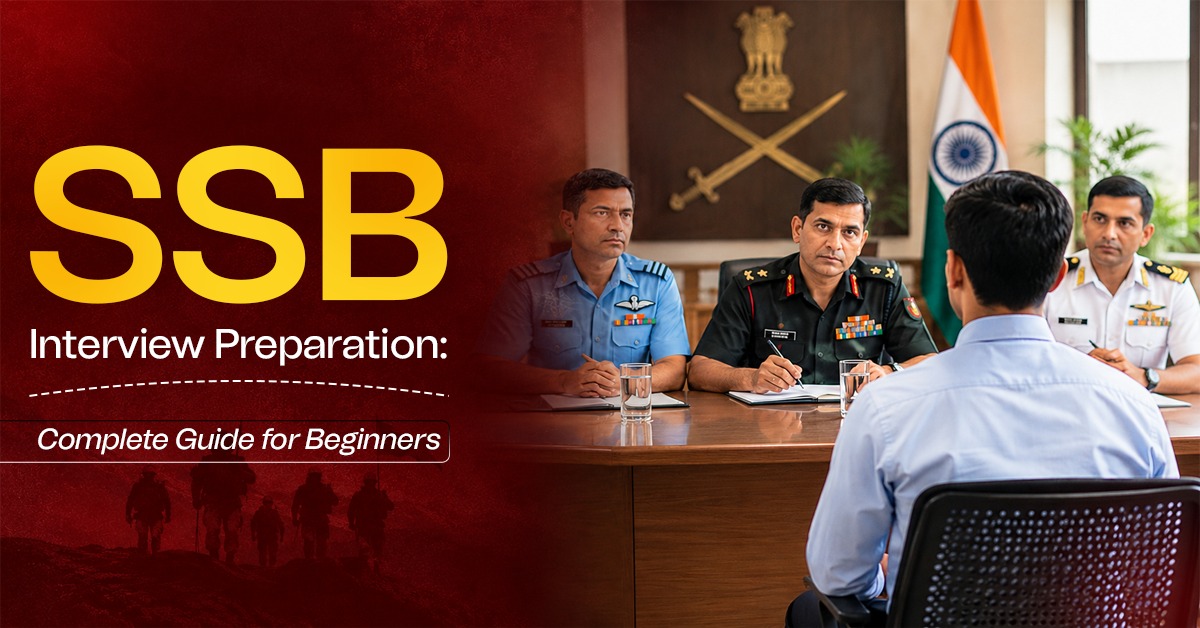
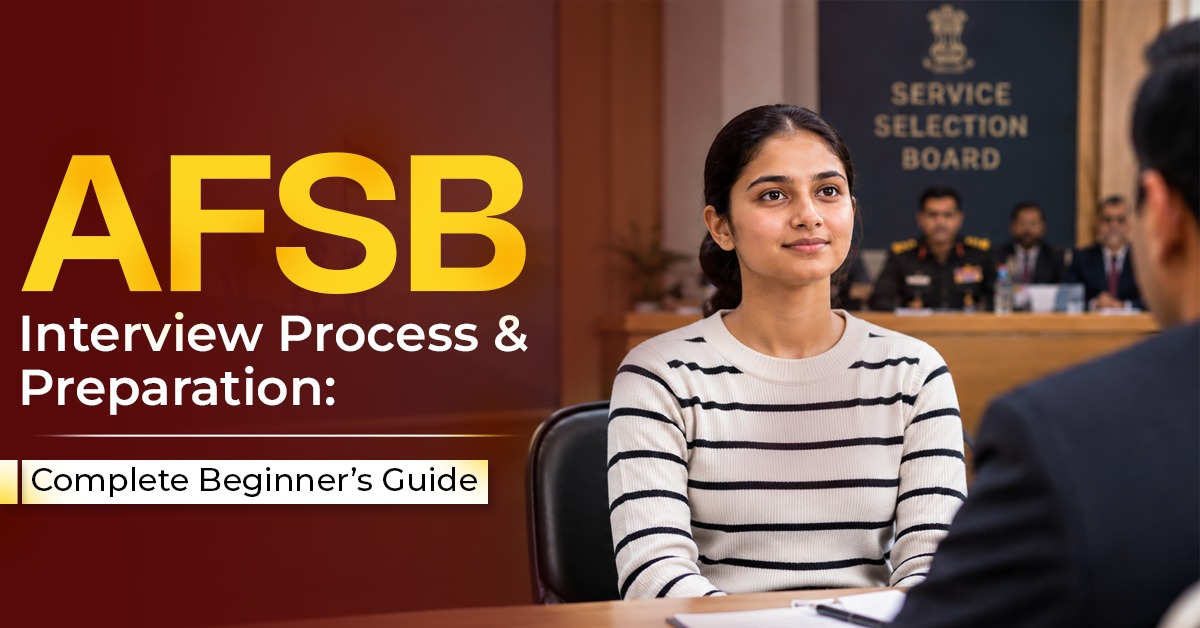
The SSB (Services Selection Board) interview is the final selection stage for both CDS and AFCAT. For AFCAT, it is referred to as AFSB. As of the AFCAT SSB vs CDS SSB comparison, both of them differ majorly in their competition level.
Five rounds are conducted - Screening Test (OIR + PPDT), psychological tests, group testing officer tasks, personal interview, and conference
OLQs (Officer-Like Qualities) are analyzed in candidates for which students enroll in the best defence academy.
Higher academic diversity is seen among CDS SSB candidates.
CDS or AFCAT: Which is More Difficult?
Before starting preparation for the exam, you should analyze the difficulty level of them both. The AFCAT vs CDS difficulty level comparison tells you which exam you can crack much easier. While AFCAT is faster-paced, the CDS is knowledge-intensive. For students weak in mathematics, AFCAT is often easier. For strong academic learners, CDS offers broader opportunities. Overall, perceiving the difficulty of both exams varies for all candidates.
CDS includes Mathematics for most entries, which is considered very difficult
AFCAT requires faster problem-solving
CDS has broader syllabus coverage
AFCAT has shorter exam duration but higher question speed pressure
AFCAT Vs CDS Salary Comparison
The majority of defence aspirants dream of having a military career for the handsome salary and perks. On seeing the AFCAT vs CDS salary comparison, you would know that both are the same for candidates who have completed their training. However, career paths and branch allocations may slightly influence allowances and growth opportunities.
Training stipend: Around ₹56,100 per month (during academy training)
Commissioned Lieutenant/Flying Officer level: Pay Level 10 (approx. ₹56,100 - ₹1,77,500)
Additional allowances: Military Service Pay (MSP), Flying Allowance (for pilots), and Field Area Allowance (based on posting)
Conclusion
AFCAT and CDS are seen as the gateways to providing prestigious career opportunities of serving in the Indian military. However, getting an entry into these gateways is the toughest part of the process. For deciding which branch you want a career in and which exam can lead you to that branch, comparing different aspects of both is important.
If you were thinking, “CDS or AFCAT which exam should I choose?” then you have got your answer here. Now, to start your preparation, enroll at Prahar Defence Academy, the top CDS as well as top AFCAT coaching classes Nagpur that ensures you turn into a military professional by helping you clear the exam with guidance from ex-military officers.
Frequently Asked Questions (FAQs)
Q. Which one is tough, CDS or AFCAT?
Generally, CDS is considered a tougher exam than AFCAT. At the same time, the educational background and preparation of a candidate influence how difficult a candidate can consider either of the exams.
Q. Which is better for girls, CDS or AFCAT?
AFCAT is considered better for girls as they can join any of its branches - flying or ground duty. In CDS, girls are only eligible to join the OTA roles.
Q. Can I write AFCAT without Maths?
Yes, you can write AFCAT without Maths and target the ground duty (non-technical roles). Mathematics is mandatory in the ground duty (technical) and flying branches.
Q. Are AFCAT and CDS SSB the same?
The AFCAT and CDS SSB exam are the same in their pattern. They analyze the 15 officer-like qualities in a candidate and are divided into five stages.