NDA Medical Test Requirements: Guidelines, Tests, & Tips
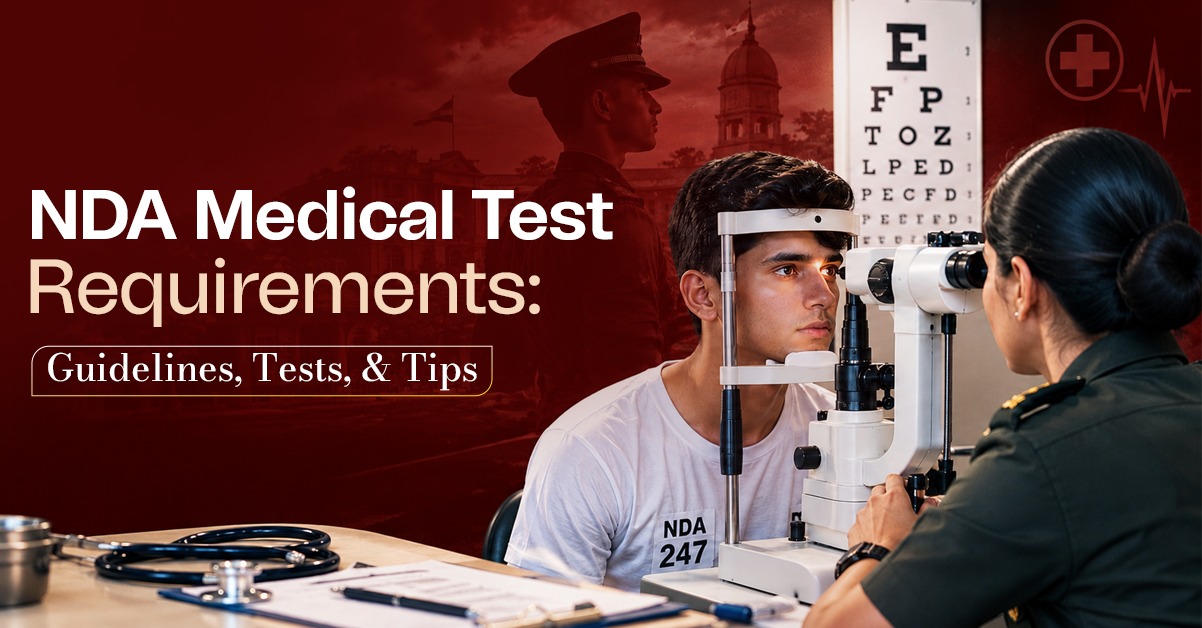
The National Defence Academy (NDA) exam process consists of three rigorous stages, out of which the third one is the NDA medical examination. In this stage, thousands of candidates are evaluated as physically and medically fit for training as future officers in the Indian military. This exam is conducted by a Special Medical Board (SMB) comprising official military doctors at designated Armed Forces Medical Services (AFMS) hospitals and includes various tests for vision, hearing, height, weight, general health, and more. To clear this exam, you should understand all the NDA medical requirements, get a medical fitness certificate to identify where you lack, what problems may get you rejected, and how you can fix them on time.
What Are the NDA Medical Requirements?
The NDA medical requirements are specified in the form of guidelines released by the UPSC. These guidelines explain the requirements for all candidates, male & female, based on the branch they are applying for. The following are all of the physical and medical requirements of NDA that are tested during the medical examination stage:
Height and weight
Body Mass Index (BMI)
Chest measurement
Blood pressure & pulse
Vision & eyesight
Ear, Nose, & Throat (ENT)
Dental fitness
Posture, spine, limbs, and joints
Cardiovascularity
Respiration
Abdominal health
Gynecological health (for female candidates)
Blood
Urine
Mental health
What NDA Medical Tests Are Conducted?
Coaches at an NDA coaching academy recommend that candidates take the necessary medical tests at least once before the medical examination to know all the medical issues and correct them appropriately in the time they have. An NDA medical test stage includes the following tests, which you should be prepared for:
Height and weight: You must meet the prescribed height and weight standards according to your age, which influence your BMI.
Vision: Eyesight, colour vision, eye movements, and other relevant eye conditions.
ENT: Auditory function, speech clarity, and structural health of the ears, nose, throat, and oral cavity
Heart and lungs: Cardiovascularity and respiration.
Bones, joints, and limbs: Limb alignment, deformities, foot & toe alignment, joint mobility, range of motion, past fractures, spine, posture, and trunk.
General health: Height, weight, Body Mass Index (BMI), chest expansion, blood & urine health, BP, etc.
Mental health: Psychological history, stress, pressure resilience, and no schizophrenia, psychotic disorders, bipolar disorder, anxiety or panic disorders, epilepsy or neurological instability.
What Is the Difference Between Temporary Rejection and Permanent Rejection?
For all candidates who appear for the NDA medical round, there are three results - Fit, Temporary Rejection (TR), or Permanent Rejection (PR) - depending on whether they meet the NDA medical eligibility criteria or not. The majority of the candidates are confused between temporary and permanent rejection. If you don’t know how the two results are different, here’s what you should know:
Why Do Students Commonly Fail the NDA Medical Test?
Due to the large number of tests that take place to assess whether you meet the NDA medical criteria or not, there are ample common reasons why a candidate is rejected in this round. These reasons mainly revolve around NDA eyesight requirements, the orthopedic examination, or hearing issues. All the common reasons include:
Vision-related issues like major refractive errors, colour vision deficiencies, squint, etc.
Height, weight, or BMI measurements that fall outside the applicable service standards.
Orthopaedic conditions like spinal abnormalities, restricted joint movement, or deformities that affect function.
Flat feet or knock knees.
Dental problems like any major disease or improper functional dentition.
Hearing difficulties.
Hernia or other medical conditions.
Heart or respiratory abnormalities.
Skin conditions, scars, or other such deformities.
How to Prepare for the NDA Medical Test?
The best way to prepare yourself for meeting the NDA medical standards is to identify potential health concerns before the medical examination, take the appropriate measures to correct them all, and maintain a balanced fitness routine. The following are some tips from coaches at the best defence coaching academy that you should follow:
1. Get a Preliminary Medical Check-Up
A general health assessment several months before the expected medical examination can help identify issues early and correct them too.
Arrange an eye examination with an ophthalmologist.
Get a dental check-up and complete necessary routine treatment.
Consult a doctor in case of recurring pain, breathing problems, or other persistent symptoms.
Seek an orthopaedic assessment for any problem related to your posture, joints, flat feet, or spinal alignment.
Consider any previous surgery, significant injury, chronic illness, or regular medication too.
Get vision and colour perception checked against the service requirements.
Get your dental cavities and gum disease treated, if you have any.
Seek an ENT consultation if you have any ear pain, hearing difficulty, or a nasal or throat problem.
2. Maintain a Healthy Weight and Balanced Diet
One of the most important considerations is your weight, which should be appropriate to your age and height, to meet the necessary NDA physical standards.
Eat balanced meals regularly containing protein, whole grains, fruit, vegetables, and healthy fats.
Drink sufficient water.
Avoid unverified weight-gain products, slimming pills, and other such supplements.
3. Build Fitness With a Routine
Changes in your body are not seen with just a few days of effort but over a few months. Hence, one of the most basic things you should do is exercise regularly to improve your stamina, strength, mobility, and overall health.
Include cardiovascular activities such as jogging, cycling, or swimming in your routine.
Add basic strength exercises and mobility work to your exercise schedule.
Give appropriate time to rest and recovery also.
Conclusion
Due to the strictness of the NDA medical examination stage and the great efforts needed to eliminate all your health problems and become fit, months of preparation are necessary for it. This preparation can be effective and fruitful for you only if you take medical guidance from experts at a good defence coaching academy.
One academy where you can get great guidance for every stage of your NDA medical examination is Prahar Defence Academy in Nagpur, where you get guidance from ex-military officers for passing your exam.
Frequently Asked Questions (FAQs)
Q. Is a medical test required for NDA?
Yes, passing the medical examination stage is necessary for NDA, which is the third stage of the overall exam process.
Q. Is surgery allowed in the NDA?
Laser eye surgeries like LASIK, PRK, and SMILE are not allowed in the NDA. However, surgeries for minor, treatable issues like DNS or hernia are allowed 6 months before the medical examination.
Q. Is NDA medical tough?
Yes, the NDA medical examination is very tough and strict.
Q. Is overweight allowed in the NDA?
No, being overweight is not allowed in the NDA. If your weight is more than what is required according to your age and height, you will be given a temporary rejection with some time to reduce your weight.
Q. Does the Indian Army allow spectacles?
Yes, the Indian Army allows spectacles to certain limits, which include a maximum myopia of +2.5D, hypermetropia of +2.5D to +3.5D, and astigmatism of ±2.5D measured during the NDA eye test.
Related Posts